The Evolution of Railway Signalling: From Ball Signals and Absolute Block Working to Token Instruments and Track Circuits
Historic semaphore railway signal gantry guarding interlocking switches at a rail junction

Railway operations are fundamentally governed by a terrifying physical reality: a heavy train traveling at speed cannot steer around obstacles, and its braking distance vastly exceeds the visual sighting distance of the locomotive driver. In the dawn of the railway era, this geometric constraint led to horrifying rear-end and head-on collisions. To establish safe train … Read more

Westinghouse Air Brakes and Fail-Safe Pneumatics: The Friction Dynamics That Revolutionized Train Safety and Tonnage

Vintage railway triple valve pneumatic air brake assembly mounted beneath freight rolling stock

Of all the mechanical inventions that enabled the expansion of global railways, none was more consequential than the automatic air brake. Prior to the late 1860s, stopping a heavy train was a primitive, brutal, and lethal gamble. Trains were braked manually by teams of brakemen who sprinted across icy freight car rooftops to hand-crank manual … Read more

Steam Locomotive Boiler Thermodynamics: Fire-Tube Hydraulics, Superheating Elements, Injectors, and Stephenson Valve Gear

Cutaway view of a steam locomotive boiler showing firebox fire-tubes and superheater elements

A steam locomotive is essentially a high-pressure chemical and thermodynamic processing plant mounted upon a moving chassis. Operating under extreme spatial and dimensional constraints, its fire-tube boiler must generate thousands of pounds of superheated steam per hour from burning fossil fuels, transmitting immense thermal energy into mechanical tractive work at the railhead. From the combustion … Read more

The Diesel-Electric and Electric Transition: Early Pioneers, Traction Motors, Pantograph Catenary Systems, and the Demise of Commercial Steam

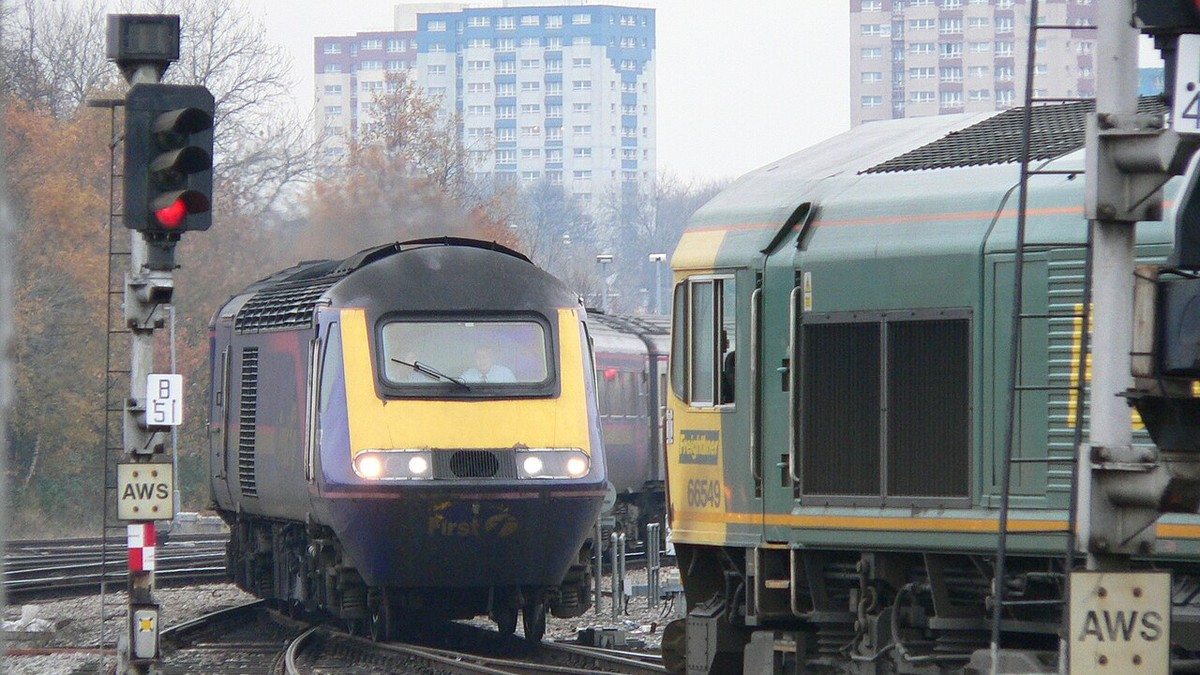
Modern high-horsepower diesel-electric locomotive hauling heavy container freight across mainline tracks

Between 1935 and 1960, the global railway landscape underwent the most rapid, ruthless technological revolution in its history: the complete extinction of commercial steam traction and the triumph of the diesel-electric and electric locomotive. Despite a century of romantic affection and mechanical refinement, the steam locomotive was doomed by brutal thermodynamics: an overall thermal efficiency … Read more