Why Railway Tracks Use Ballast Drainage, Stability, and Load Distribution
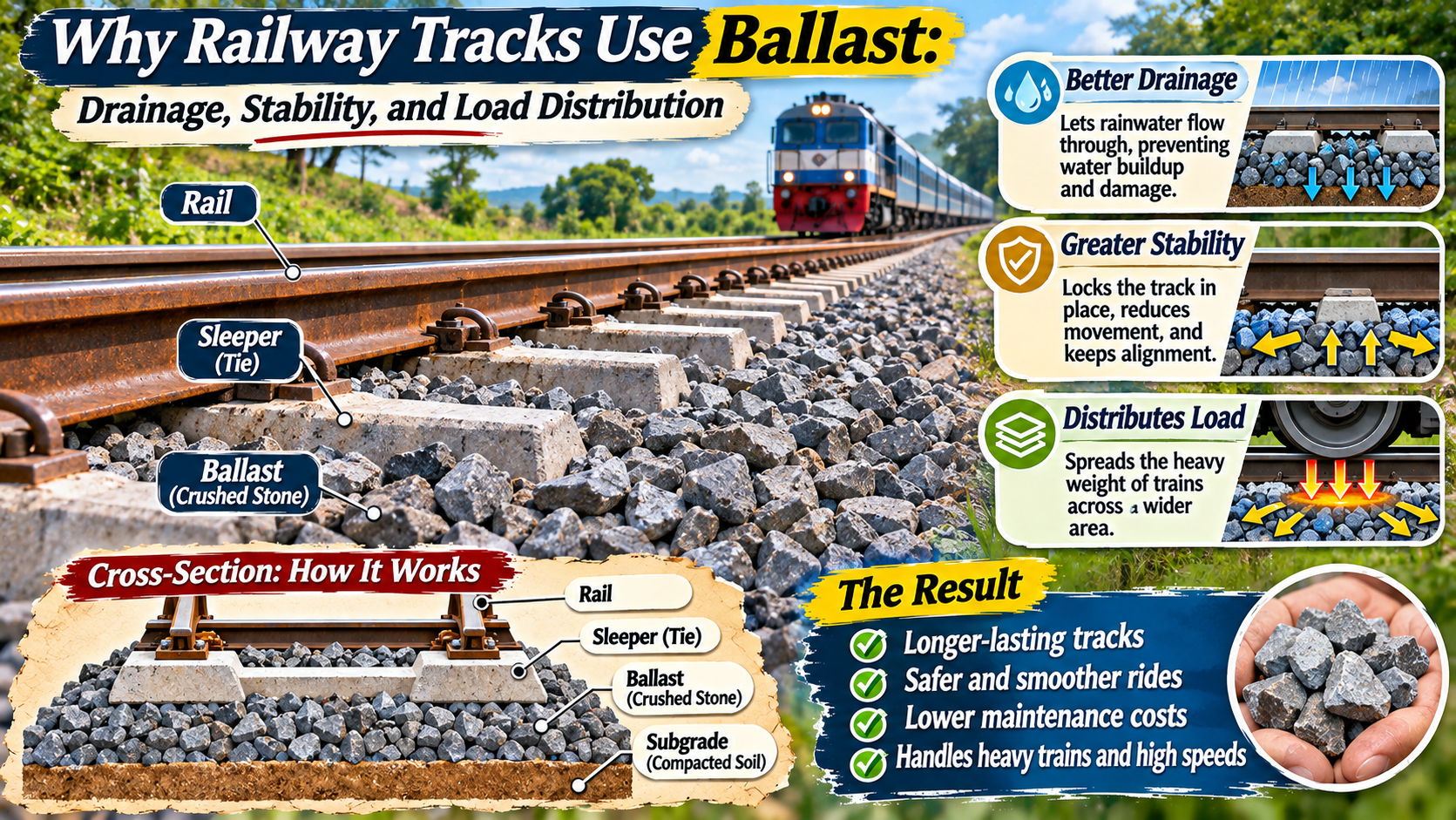
RAILWAY ENGINEERING / TRACK INFRASTRUCTURE The Engineering Beneath Every Railway Journey Discover why crushed stone supports railway tracks, how it manages water, and why its shape helps keep rails stable under repeated train loads. DRAINAGE TRACK STABILITY LOAD SUPPORT Look closely at a conventional railway track, and you will usually notice a thick layer of … Read more
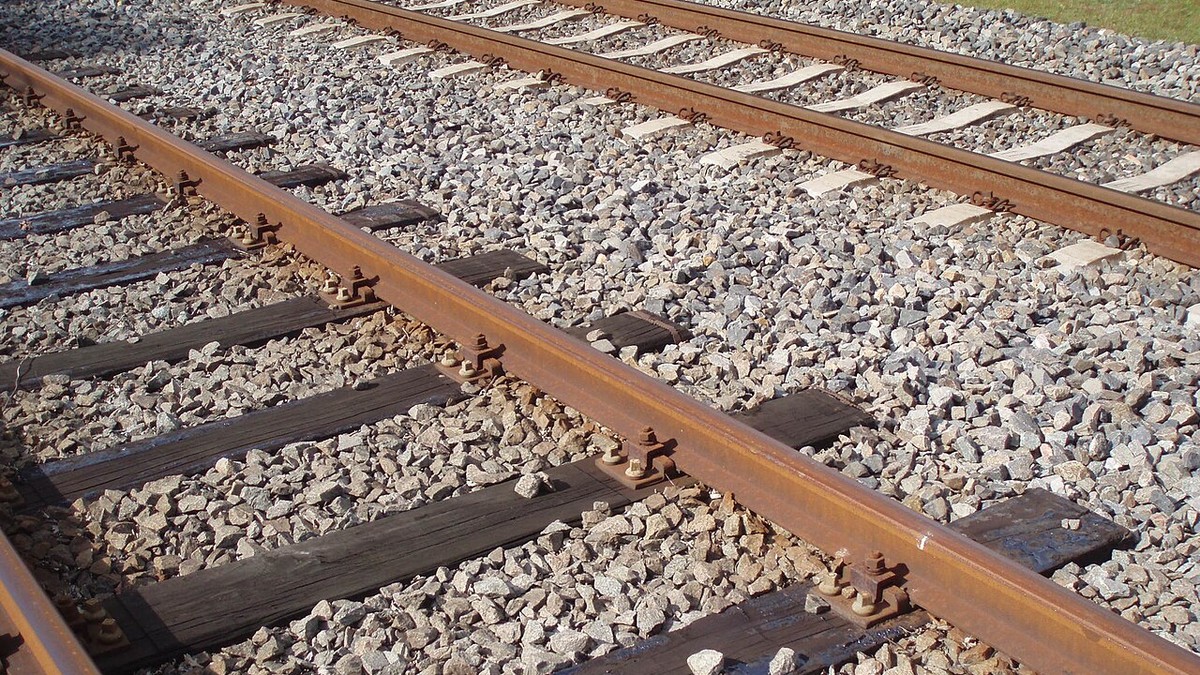
Permanent Way Civil Engineering: Subgrade Mechanics, Ballast Compaction, Timber Ties, and Continuous Welded Rail (CWR)

Railway track permanent way featuring crushed rock ballast prestressed concrete ties and steel rails

The permanent way—the foundational infrastructure comprising the formation subgrade, granular ballast, cross-ties (sleepers), fastenings, and running steel rails—represents the most critical civil engineering system in rail transport. Unlike highway pavements that distribute static axle loads broadly across sub-base soils, a railway track structure is an elastic beam on a resilient foundation, subjected to violent dynamic … Read more

Trestles, Viaducts, and Cantilevers: The Evolutionary Engineering of the Firth of Forth Bridge and Mountain Rail Passes

The massive red steel cantilever arches of the Forth Bridge spanning the Firth of Forth in Scotland

The railway expansion across planetary geography confronted profound chasms: tidal estuaries, abyssal mountain canyons, and broad river valleys that could not be conquered by standard earthen embankments. To carry heavy, dynamic train loadings across these voids without excessive gradients, nineteenth-century civil engineers created monumental structural typologies: the sprawling timber trestles of the American frontier, the … Read more

Alpine Tunneling Masterpieces: Compressed-Air Shields, Hydraulic Drills, and the Breakthroughs of the Simplon and Gotthard Bores

Historic stone masonry portal of the Gotthard Alpine railway tunnel in Switzerland

The Alps presented the ultimate geographic wall separating Northern and Southern Europe. For millennia, trade between Italy, Switzerland, France, and the German states was choked by treacherous high-altitude mountain passes closed by snow and ice for eight months of the year. The nineteenth-century railway conquered this formidable barrier not by scaling peaks with impossible cogwheel … Read more

Railway Track Geometry, Gradient Compensation, and Superelevation: Cant Physics, Transition Spirals, and Derailment Mitigation

Modern high speed tilting passenger train banking sharply through a superelevated track curve

The physics of guided terrestrial locomotion is dictated by precision track geometry. Unlike an automobile whose driver steers actively across an open roadway, a railway vehicle is guided entirely through the passive kinematic contact between its coned steel wheel treads and the steel railhead profile. As train speeds scale from nineteenth-century 30-mph branchlines to modern … Read more